GOOGLE UX DESIGN PROJECT
CASE STUDY: APP AND SITE DEVELOPMENT
PEDIBADGE
Clear health compliance for school, camp, and care for modern families
A Children's health tracking app and responsive website to let parents and caregivers effortlessly view, track, and export official health records, print school/camp-compliant forms in two taps, and monitor upcoming healthcare visits. Benefitting users (busy multi-tasking parents, shift workers, neurodiverse individuals, and those managing multiple children) by reducing stress, eliminating portal navigation fatigue, and ensuring children's health requirements and medical milestones are met on time without missing deadlines.

Effectiveness measured by tracking task completion rates for record exports (aiming for under 60 seconds), reduction in missed or overdue child vaccination/visit milestones, user retention rates, and high accessibility compliance ratings (WCAG 2.1 AA standard).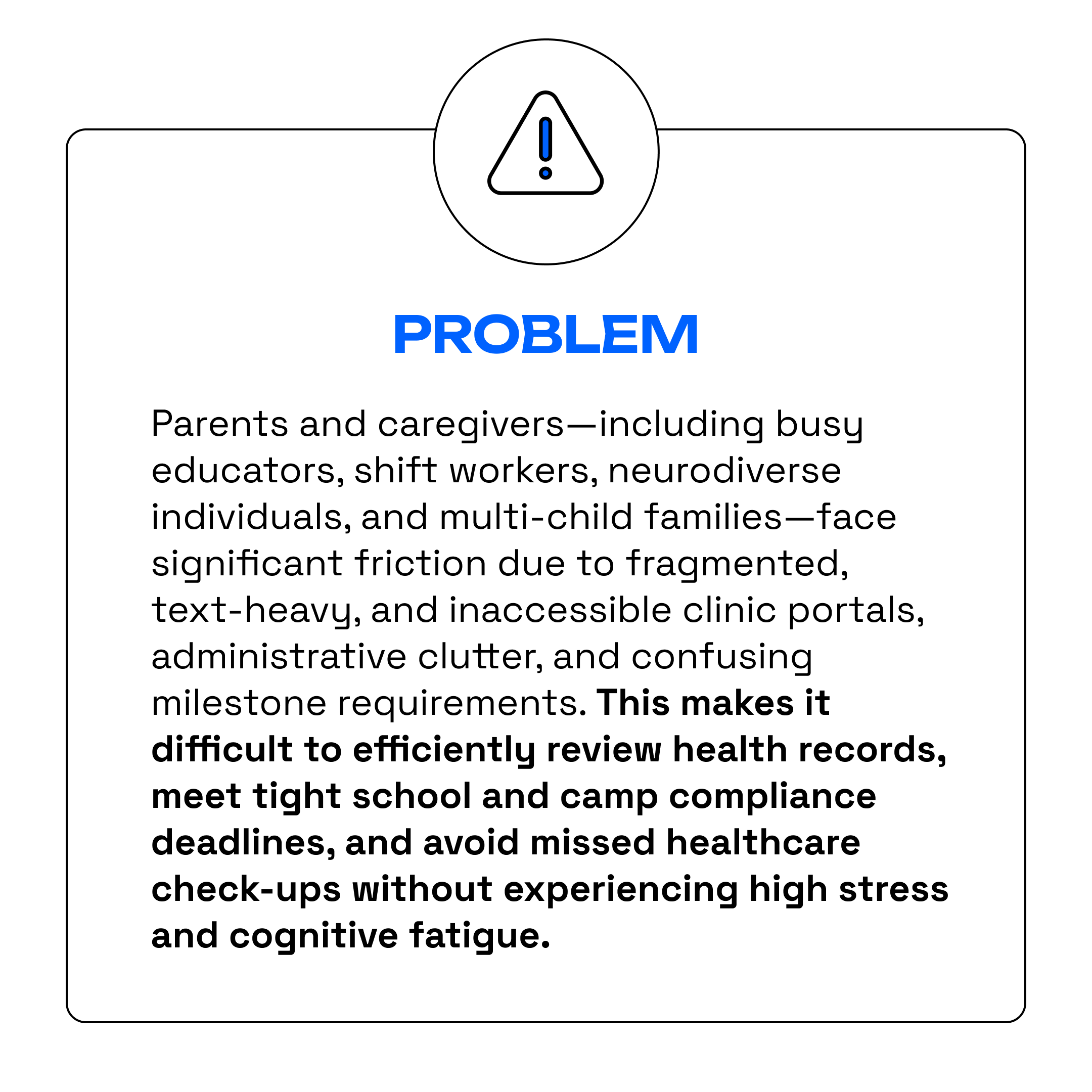
PROJECT OVERVIEW
-
Lead UX Designer, Producer, and Researcher
-
User Research + Analysis
Defining Pain Points and Goals
Competitor Audit Reporting
Ideating
Wireframing
Prototyping and Testing
EMPATHIZE: USER RESEARCH
SUMMARY
User research was conducted through qualitative interviews and empathy mapping with five representative caregivers (two specific user personas shared below) to understand how parents manage pediatric health records and appointment schedules. Going into the research, it was assumed that users struggled with remembering appointment dates and that standard portal layouts were sufficient if information was consolidated. However, post-interview analysis revealed that the primary pain points stemmed from poor document visual formatting, inaccessible digital interfaces for neurodiverse caregivers, and strict submission deadlines for school or camp compliance rather than simple scheduling oversights.
PAIN POINTS
-
Lack of time
Extremely organized out of necessity but severely constrained by responsibilities.
-
inequitable DESIGN
Dyslexia causes frustration navigating dense text or poorly formatted portals.
-
MENTAL LOAD
Anxiety about misplacing medical records or forgetting critical follow-up care visits.
-
Missed deadlines
Uncertainty regarding booster dates and milestone visit documentation.
-
redundant actions
Repetitive form retrieval for multiple children leads to clutter or lost data.
-
ACCESIBILITY
Managing child's health records on-the-go is not possible for visually impaired.
USER PERSONAS
Aggregate User
Empathy map
Empathy mapping was executed to synthesize qualitative observations into structured quadrants: Says, Thinks, Does, and Feels.
USER Journey map: REENA
DEFINE: USER NEEDS AND BUSINESS GOALS
Executive Summary & Core Product Scope
The Define stage deliverables for the Children's Health App project. Following the synthesis of user research gathered during the Empathize phase, this document establishes clear problem statements, testable hypothesis statements, and outcome-oriented goal statements across five primary user personas.
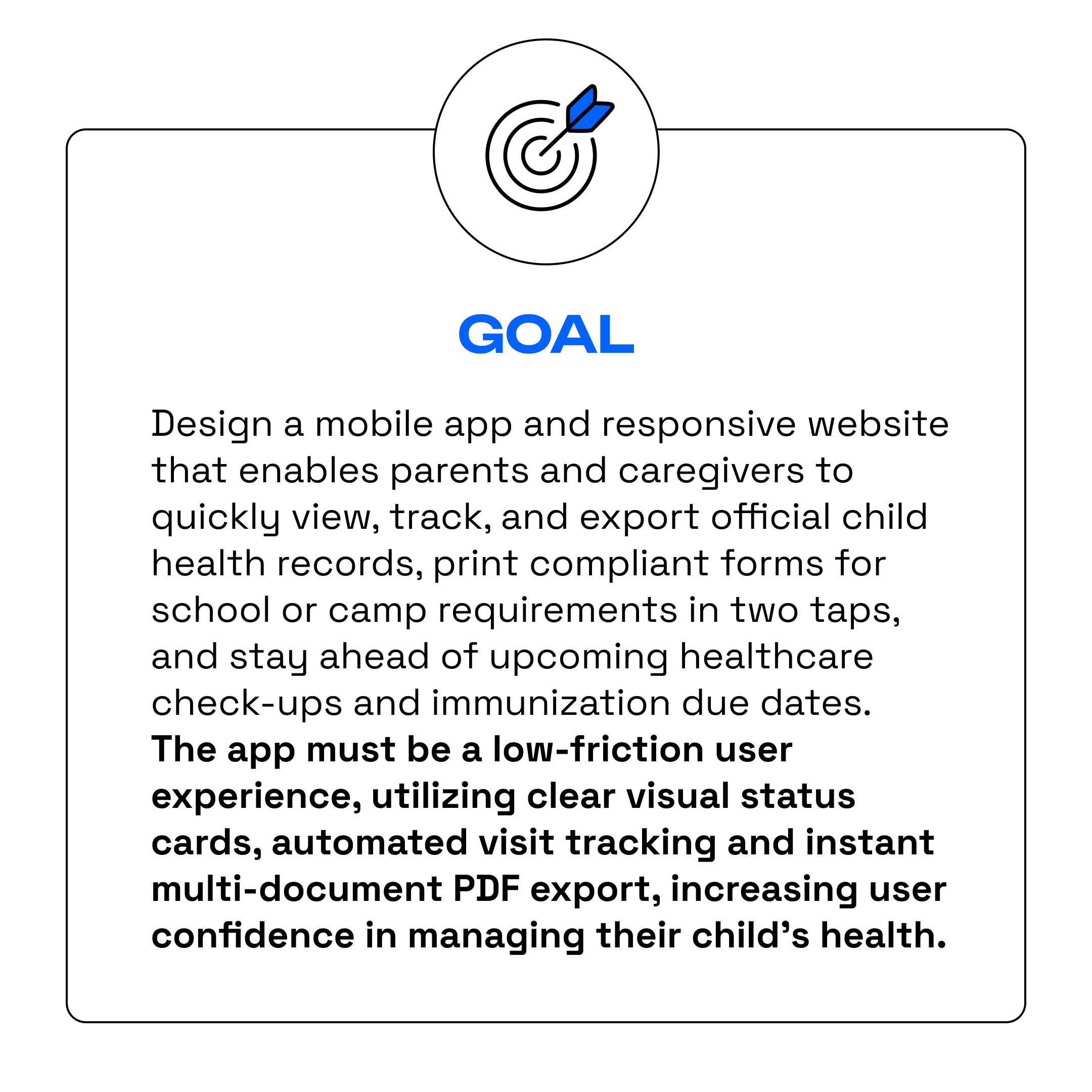
The core objective of the application and responsive web platform is to empower parents to seamlessly review their children's complete medical records, export and print compliance documents for school or summer camp requirements, and receive timely notifications regarding upcoming healthcare visits and immunization schedules. All defined goals directly map to core product features and strategic business requirements.
Business Alignment Overview
To ensure product success, every user goal defined in this stage maps directly to the three pillar business requirements of the Children's Health App platform:
Pillar 1: Record Access & Review: Secure, intuitive retrieval of pediatric records and immunization histories.
Pillar 2: On-Demand Form Export & Printing: Effortless document generation customized to meet school, athletic, and camp compliance standards.
Pillar 3: Preventive Visit & Milestone Tracking: Automated tracking and notifications for required checkups and vaccinations.
Persona Problem, Hypothesis, & Goal Matrix
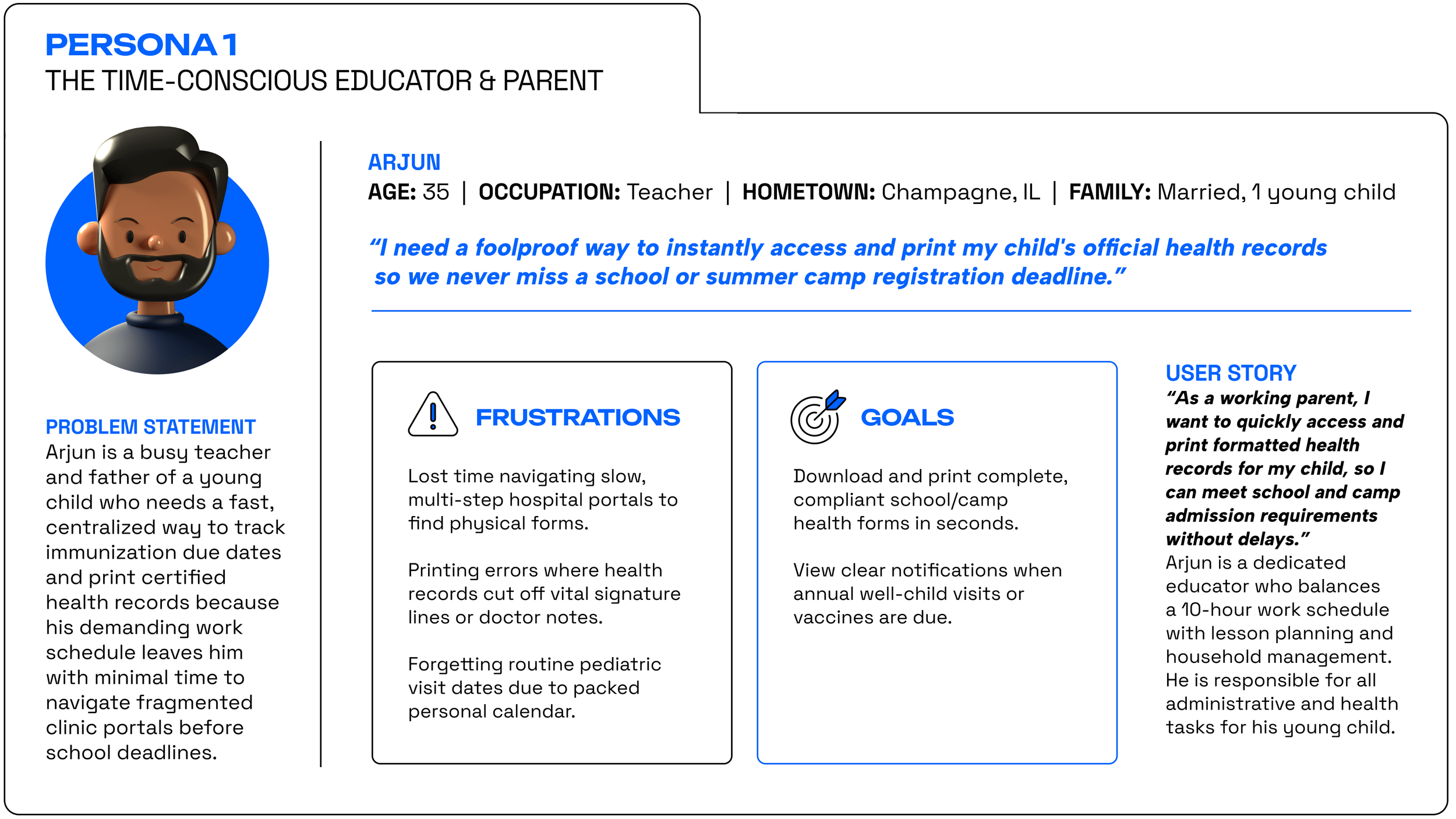
1. Arjun — The Time-Constrained Educator
Neelam is a 35-year-old teacher and mother of a young child who manages a high-stress daily routine balancing syllabus planning, grading, and family care.
Problem Statement: Arjun is a busy teacher and father of a young child who needs a fast, centralized way to track immunization due dates and print certified health records because his demanding work schedule leaves him with minimal time to navigate fragmented clinic portals before school registration deadlines.
Hypothesis Statement: If we provide Arjun with a 1-click printable health package and automated visit due date sync, then she will submit his child’s required school forms on time without stress, because all necessary documents and deadlines will be organized in a single accessible workspace.
Goal Statement: Our goal is to enable effortless health compliance for Arjun by delivering automated visit tracking and instant multi-document PDF export utilities, which will reduce document preparation time from hours to under two minutes while preventing missed immunizations.
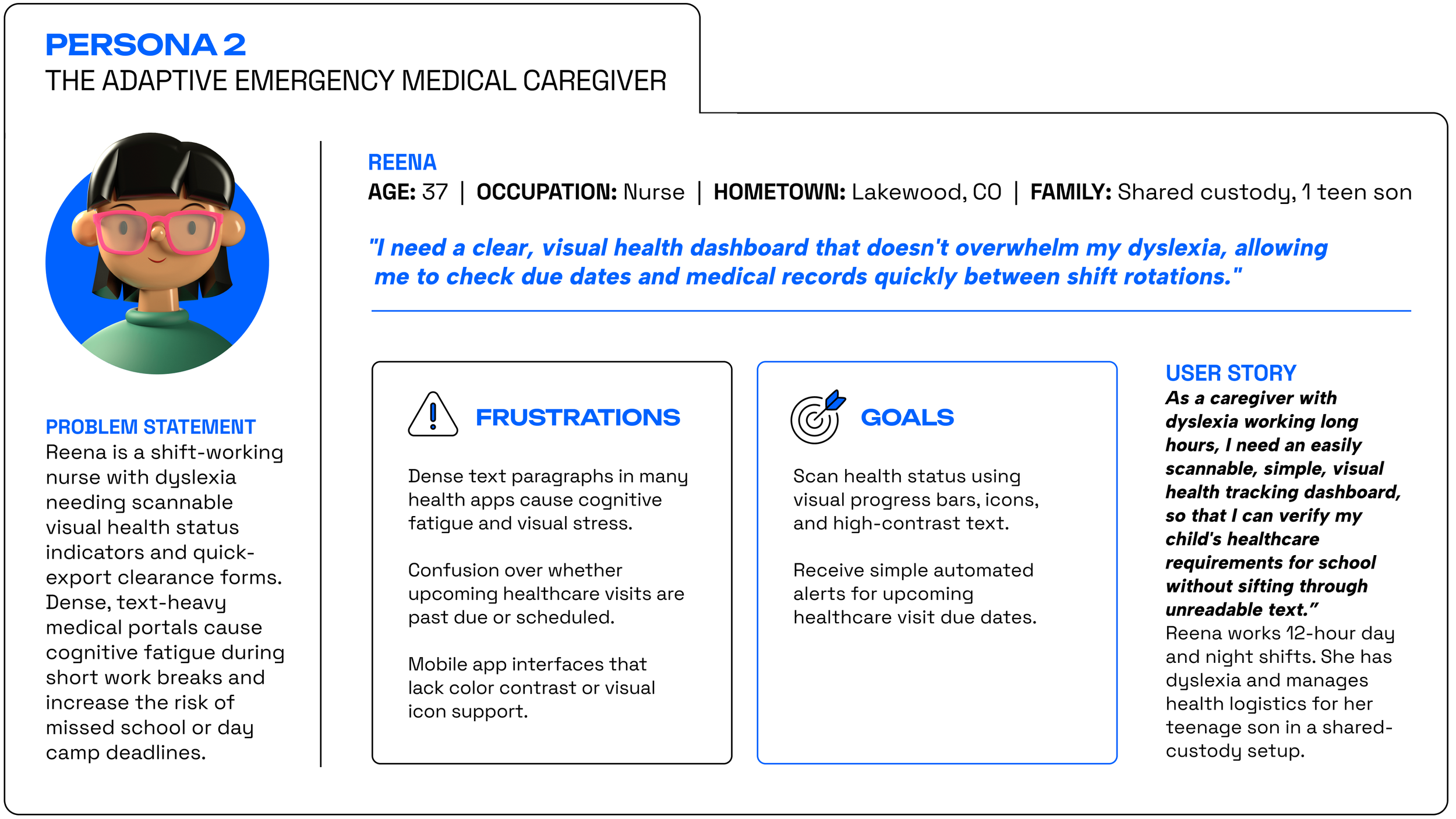
2. Reena — The Shift-Working Nurse
Reena is a 37-year-old paramedic working alternating day and night shifts who shares custody of her teenage daughter and lives with dyslexia.
Problem Statement: Reena is a shift-working paramedic with dyslexia who needs scannable visual health status indicators and quick-export camp clearance forms because dense, text-heavy medical portals cause cognitive fatigue during short work breaks and increase the risk of missed camp document deadlines.
Hypothesis Statement: If we implement color-coded compliance badges and high-contrast 1-click document printing for Reena, then she can quickly review record statuses and download valid camp forms, because she won't have to decipher complex text blocks while exhausted.
Goal Statement: Our goal is to offer a visual-first, low-friction document extraction experience for Reena by designing clear visual status cards and single-tap printing, which will increase her confidence in managing paperwork and eliminate submission errors.
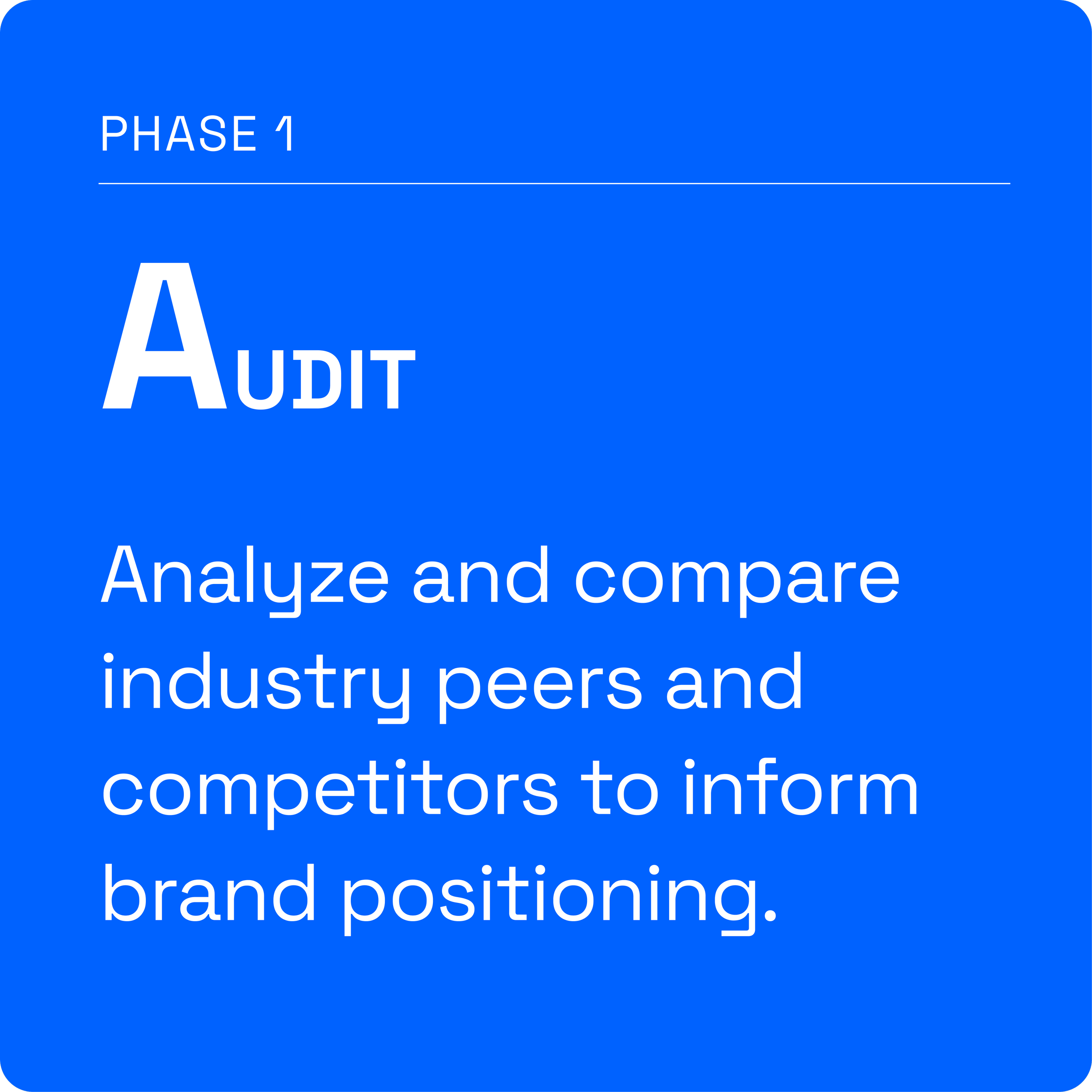
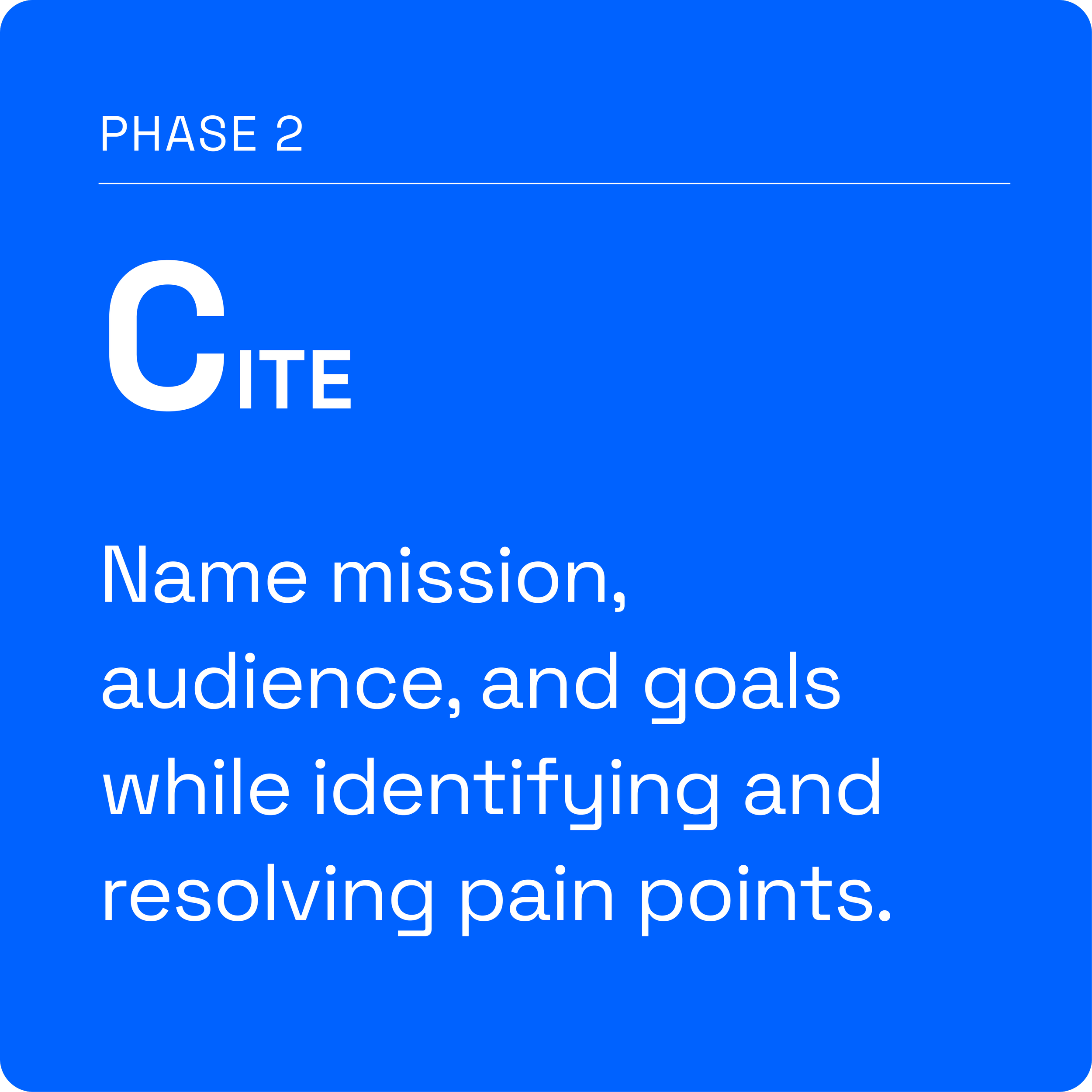
Creating a Brand Blueprint that stands out from the rest requires first exploring your peers and competitors’ visual identity. getting clear on your mission, who you serve, and the problems you’re solving. This establishes a north star for creating a visual language that speaks directly to your primary audience.
the ace in your hand
THE ACE PROCESS
-
Making intentional creative decisions requires reflection and research.
This is why the first step is performing a full, async creative audit of your current visual systems, as well as your industry competitors and peers.
You’ll receive key findings along with concrete recommendations for positioning your visual identity so it stands out among the rest.
This phase sets the foundation for building a Brand Blueprint -
Effective visual identity is evidence of a conscious decision you've made about what you believe, who you serve, and why.
When that decision is unclear, the branding tries to connect with everyone at once (patients, providers, investors, and more), and the result ends up feeling generic and forgettable to all of them.
This is why the The Brand Blueprint works, because it treats your brand like a person with a point of view.
Everything we outline in your Brand Blueprint (mission, audience, Brand Energies, and moodboard) will be in service of one specific person's experience of your brand.
This level of specificity helps inform the look-and-feel of your visual systems later on, and helps you make brand-aligned creative decisions with confidence.
-
WEEKS 7 - 12+
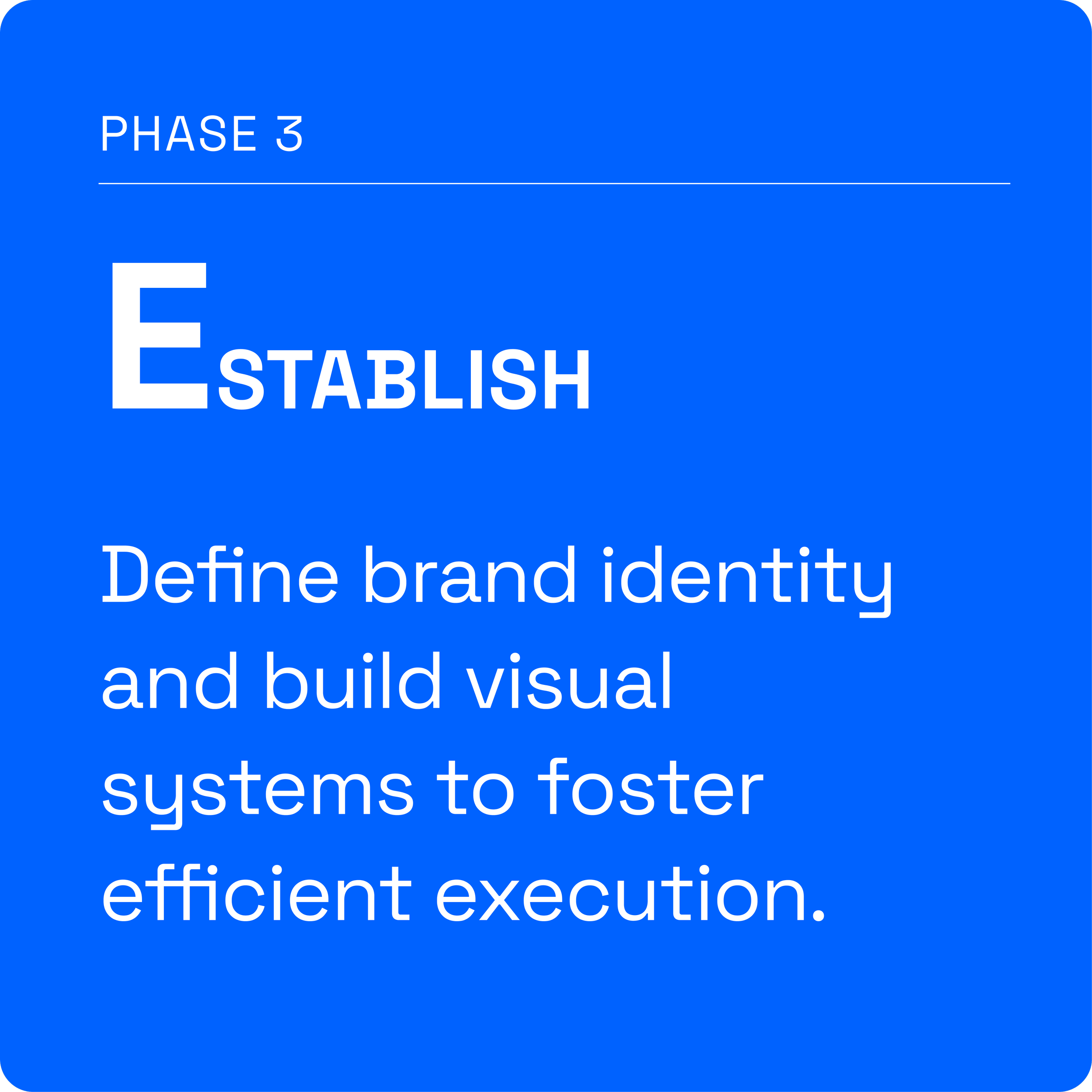
With a completed Brand Blueprint, establishing a visual language that speaks directly to your primary audience becomes a straightforward process.
After Phase 2, if logo development is needed, this may be purchased as an add-on service. The logo suite will be executed prior to completing The Visual Systems Library.
The Visual Systems Library includes an 8-icon set of key concepts, as well as 4 branded charts (pie, line, bar, and one alternate expression of data visualization).
This Library also contains your Brand Style Guide, outlining important design details: colors, fonts; icon, chart, and callout styles and settings, etc.This will serve as a design guide for your your team in expanding and evolving the brand as your business grows.
Need new icons in your library after you complete the Visual Systems Sprint? The Brand Style Guide tells designers and creative partners exactly how to build upon your existing icon library with clarity and consistency.
7 PRINCIPLES OF INTENTIONAL DESIGN
WHERE ace HAS WON
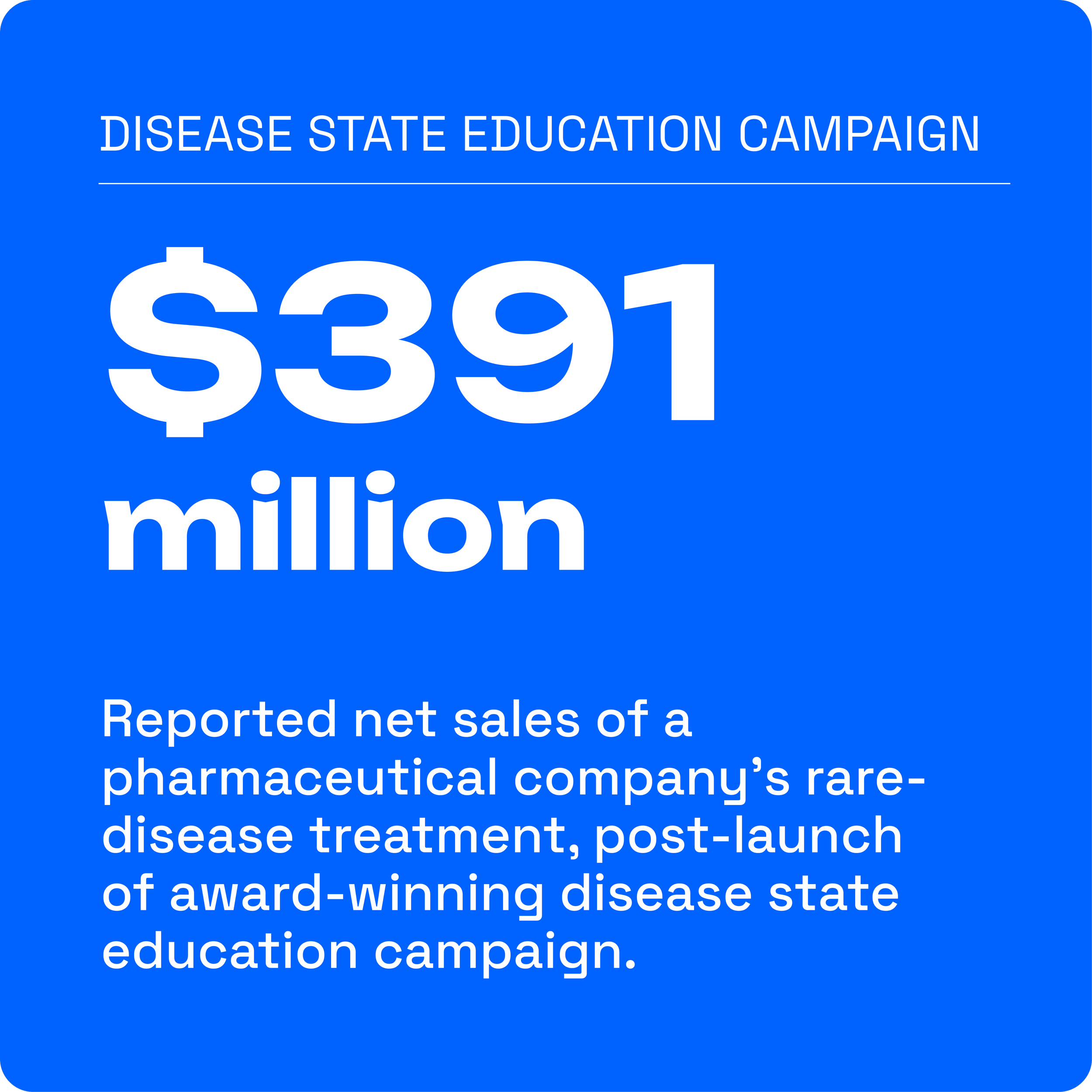
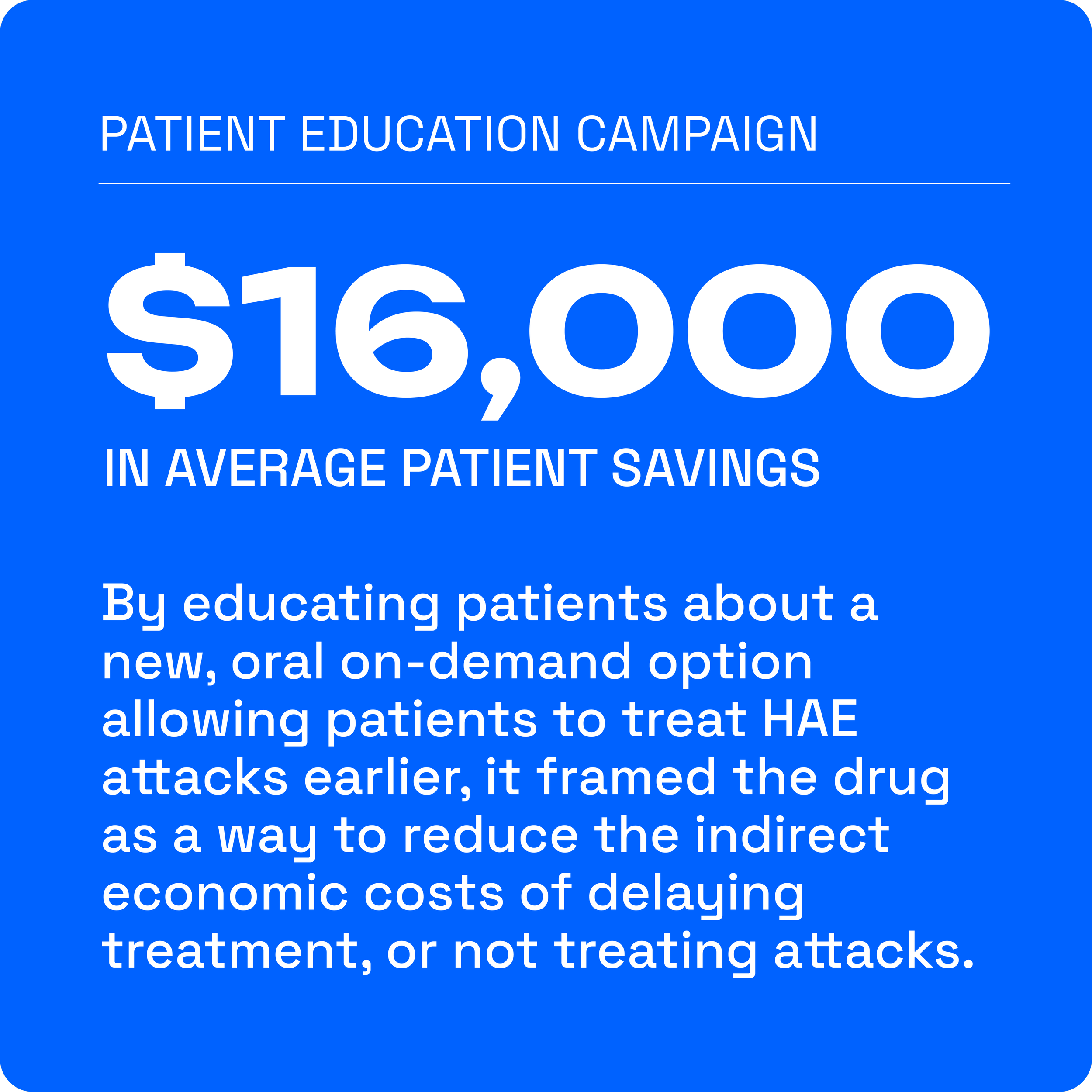
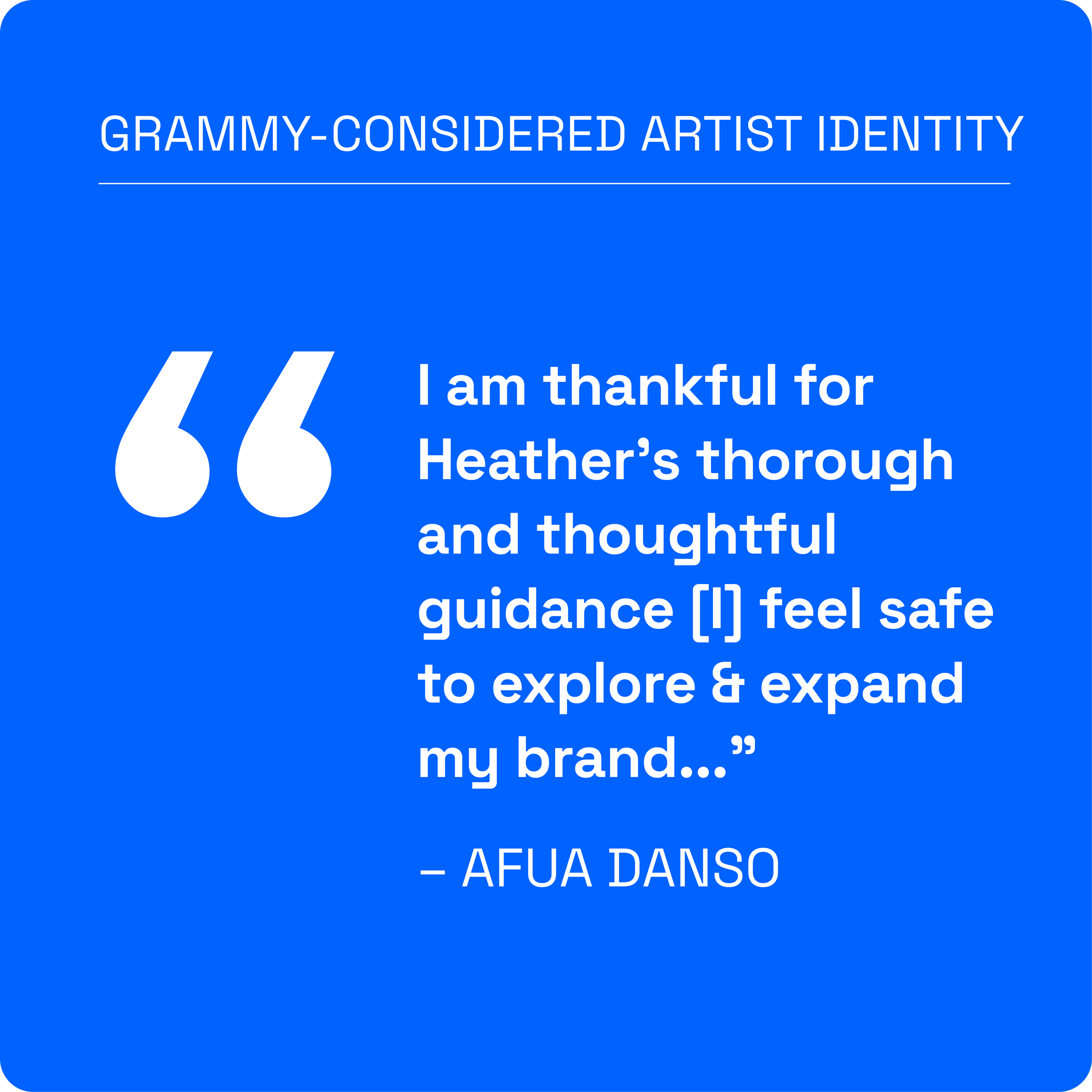
Across health, tech, and creative industries, my ACE approach and creative contributions have helped increase sales, educate patients, engage communities, empower clients, win awards, and earn industry recognition.
an integral player
on an award-winning creative team
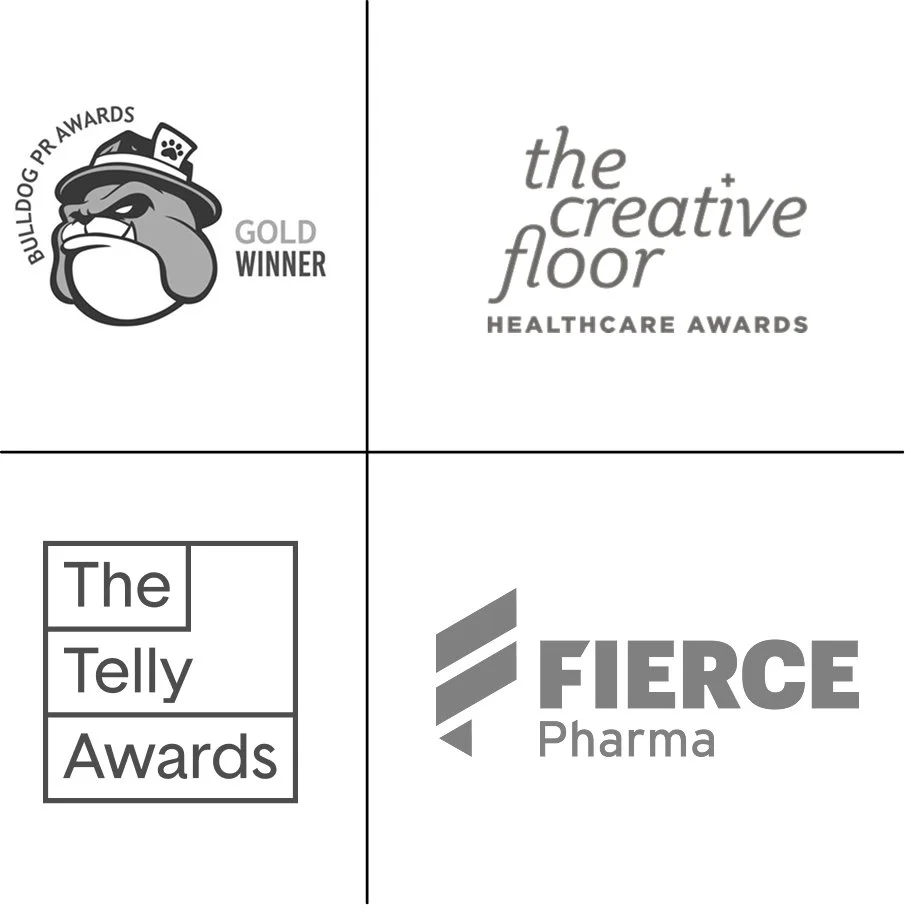
I recently supported the creative team at a healthcare advertising firm, developing key branded assets and patient engagement tools for an award-winning patient education campaign, earning multiple industry awards and accolades in 2025 including:
2 Gold Bulldog PR Awards for Best Diversity & Inclusion Initiatives Campaign AND Best Use of Video/Multimedia
Fierce Pharma Marketing Award for Best Online Video or Film
Telly Award Silver Winner for Best Series/Documentary
The Creative Floor Award for Best Influencer Campaign in the Patient & Consumer category.
Manny Awards Finalist for Best Influencer Marketing Campaign

ready to build your brand blueprint?
Get more details about this framework and what it can do for your enterprise.